
How to Start Seeds Indoors for 2027
Table of Contents
- Use a Seed Starting Date Calculator to Plan Your Timeline
- When to Start Tomato Seeds Indoors (and Other Warm-Season Crops)
- Best Seed Starting Soil Mix: What Actually Works
- How to Start Seeds Indoors: Containers, Germination, and Early Care
- Watering, Moisture, and Post-Germination Care for Healthy Seedlings
- Hardening Off Seedlings Schedule: Moving Plants Outside Safely
- Budget-Friendly DIY Setups and Sustainable Practices
- Start Seeds Indoors the Right Way This Season
Last Updated: August 19, 2026
Use a Seed Starting Date Calculator to Plan Your Timeline
Starting seeds indoors begins with a calendar. A seed starting date calculator works by counting backward from your average last frost date. Most vegetable seedlings need a specific number of weeks indoors before transplanting. Sow too early and you'll have overgrown, root-bound plants. Sow too late and you lose weeks of the growing season.
How to Find Your Last Frost Date
Your last frost date is the average date in spring when temperatures are unlikely to drop below 32°F again. The USDA Plant Hardiness Zone Map is a good starting point, but for frost dates specifically, the National Oceanic and Atmospheric Administration frost date tool lets you search by zip code and returns historical averages based on decades of weather data. Use the 50% probability date as your planning anchor.
Building Your Sowing Schedule Week by Week
Once you have your last frost date, count backward using these standard lead times:
Crop |
Weeks Before Last Frost |
Notes |
|---|---|---|
Tomatoes |
6-8 weeks |
Warm-season, needs heat to germinate |
Peppers |
8-10 weeks |
Slowest germinator; start first |
Basil |
4-6 weeks |
Sensitive to cold; wait until soil warms |
Lettuce |
4-6 weeks |
Cool-season; can transplant earlier |
Eggplant |
8-10 weeks |
Similar timing to peppers |
Write these dates on a physical calendar and label every tray with the variety name and sowing date.
When to Start Tomato Seeds Indoors (and Other Warm-Season Crops)
For most gardeners, sow tomato seeds 6-8 weeks before your last frost date. Peppers need 8-10 weeks, and eggplant falls in the same range as peppers.
A tomato seedling grown indoors at 70°F is not prepared for outdoor wind, UV intensity, or temperature swings. Account for a hardening off period of 7-14 days on top of your growing time. Heirloom varieties like the Heritage Cottage Orange Tomato follow the same schedule as any other determinate tomato.

Best Seed Starting Soil Mix: What Actually Works
The biggest mistake beginners make is using regular potting mix for seeds. Standard mixes are too coarse, too heavy, and often too nutrient-dense. Seeds carry their own food supply. What they need is moisture retention, drainage, and fine texture that allows tiny roots to push through easily.
A quality seed starting mix combines peat moss or coconut coir, vermiculite for moisture retention, and perlite for drainage. This balance keeps the medium consistently moist without becoming waterlogged. Peat-free options are widely available and perform well.
Pre-moisten your seed starting mix before filling containers. Aim for the texture of a wrung-out sponge: moist throughout, but not dripping.
How to Start Seeds Indoors: Containers, Germination, and Early Care
Choosing and Sanitizing Your Containers
Cell packs with 72 or 128 cells are ideal for most vegetable seeds because they keep root systems separate and make transplanting easier. Soil blocks eliminate transplant shock entirely.
Sanitize containers first by rinsing with a solution of one part household bleach to nine parts water, then rinsing with clean water and allowing to dry. This prevents damping off and other seedling diseases. Make sure all containers have drainage holes.
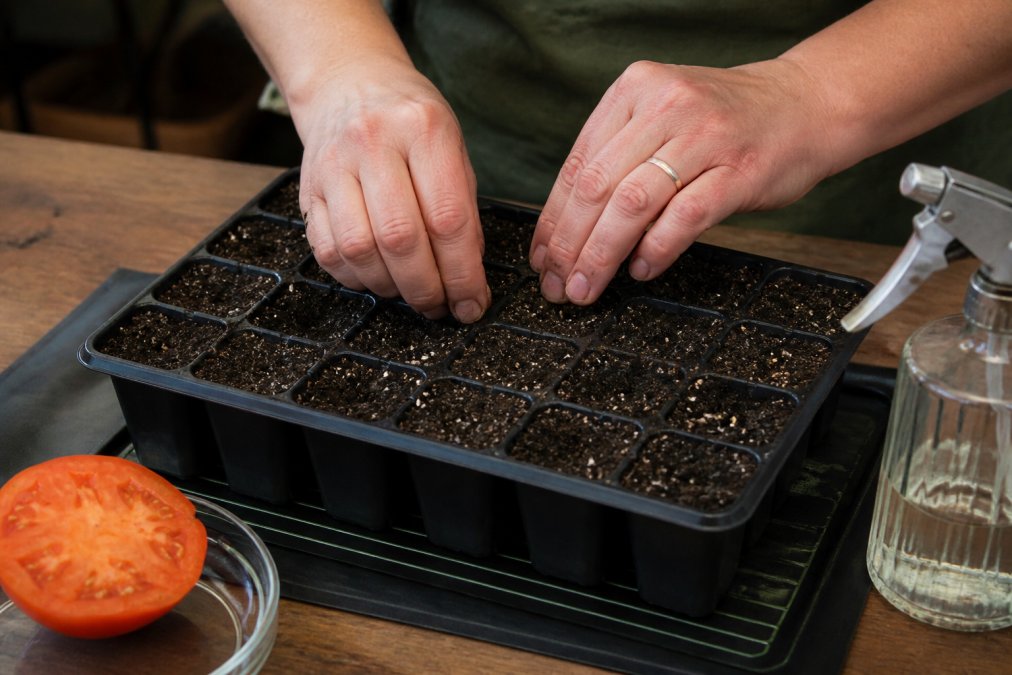
Sowing Depth, Bottom Heat, and Optimal Germination Temperatures
Plant seeds at a depth roughly two to three times their diameter. Tiny seeds like basil get pressed onto the surface or barely covered. Larger seeds like squash go in about half an inch.
Bottom heat is the single most effective tool for improving germination rates. A seedling heat mat raises the growing medium to 70-85°F, the optimal range for most warm-season crops. Without bottom heat, pepper seeds can take three to four weeks to germinate. Once germination occurs, remove the heat mat.
Lighting Requirements: Grow Lights vs. Window Sills
Window sills provide far less light than seedlings need, resulting in leggy, weak-stemmed plants. A basic shop light with full-spectrum LED bulbs, suspended 2-4 inches above the seedling canopy and running 14-16 hours per day, produces compact, stocky seedlings. Keep the lights close; hanging them too high produces the same leggy growth as insufficient natural light.
Watering, Moisture, and Post-Germination Care for Healthy Seedlings
Watering is where most seedling failures happen. The goal is consistent moisture, not wet soil. Overwatering is the leading cause of damping off.
Water from the bottom when possible. Place your seed tray in a shallow container of water and allow the growing medium to absorb moisture upward through drainage holes. This keeps the surface drier, discouraging fungal growth. Remove humidity domes as soon as the first seedlings appear.
Preventing Damping Off and Leggy Seedlings
Damping off is a fungal condition that kills seedlings at the soil line. Prevention checklist:
- Use sterile seed starting mix
- Sanitize all containers before use
- Water from the bottom
- Remove humidity domes immediately after germination
- Run a small fan on low for air circulation
- Avoid overwatering
Leggy seedlings indicate insufficient light. Increase photoperiod to 16 hours per day and lower the light fixture to within 2-4 inches of the canopy.
Once seedlings develop their first set of true leaves, apply diluted liquid fertilizer at half the recommended strength.
Hardening Off Seedlings Schedule: Moving Plants Outside Safely
Hardening off gradually acclimate indoor-grown transplants to outdoor conditions. Skip this step and you'll lose plants.
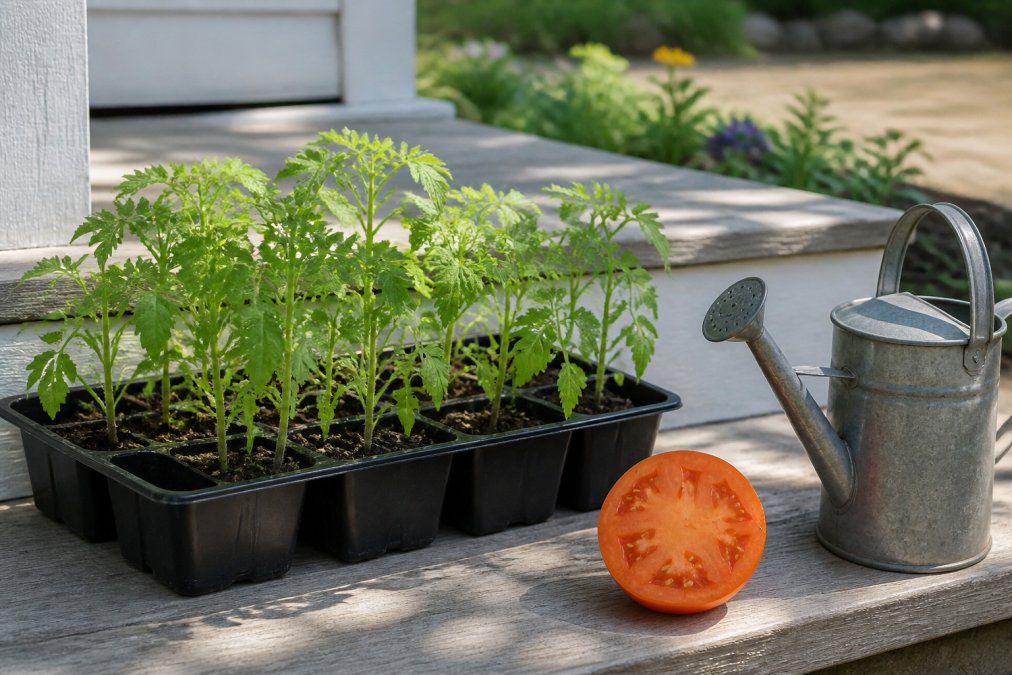
A standard 7-14 day hardening off schedule:
- Days 1-3: Place seedlings outside in shade for 1-2 hours midday.
- Days 4-6: Increase to 3-4 hours with brief direct sun.
- Days 7-9: Leave outside 6-8 hours, including morning sun.
- Days 10-12: Full days outside with direct sun.
- Days 13-14: Leave outside overnight if temperatures stay above 50°F for warm-season crops.
Move slowly. A sunny, windy day in week one can sunscald or windburn seedlings. According to University of Minnesota Extension's transplanting guidance, proper hardening off significantly reduces transplant shock.
Budget-Friendly DIY Setups and Sustainable Practices
A professional seed starting setup requires minimal investment.
Budget-friendly options:
- Shop light with LED bulbs: A basic 4-foot shop light with full-spectrum LEDs costs a fraction of purpose-built grow lights and performs comparably. Hang from a wire shelving unit with adjustable chains.
- Repurposed containers: Yogurt cups, egg cartons, and takeout containers work as seed starting containers with drainage holes punched in the bottom.
- DIY humidity dome: A clear plastic bag supported by pencils creates an effective dome during germination.
- Newspaper pots: Biodegradable newspaper pots can go directly into the ground, reducing transplant shock.
Choose peat-free seed starting mixes based on coconut coir, a renewable byproduct of coconut processing. For fertilization, diluted liquid kelp or fish emulsion provides gentle, organic nutrition. Direct sow crops like lettuce and radishes don't need indoor starting.
Method |
Cost Range |
Best For |
Sustainability |
|---|---|---|---|
Shop light + LED |
Low |
Most seedlings |
Good |
Repurposed containers |
Free |
All crops |
Excellent |
Coconut coir mix |
Low-medium |
Peat-free growing |
Excellent |
Seedling heat mat |
Medium |
Peppers, tomatoes |
Reusable for years |
Newspaper pots |
Free |
Direct transplants |
Excellent |
Heritage Cottage Seeds carries proven heirloom options that perform well from indoor starts. The Aleppo Pepper and Calabrian Pepper benefit from the full 8-10 week indoor head start, and Mrs. Burns Lemon Basil is ready to transplant in 4-6 weeks.

Start Seeds Indoors the Right Way This Season
Knowing how to start seeds indoors comes down to four fundamentals: timing based on your last frost date, a proper seed starting mix, adequate light, and careful moisture management. Miss any one and the others can't compensate. Nail all four and you'll have transplant-ready seedlings that hit the ground running.
Heirloom varieties carry flavor, history, and seed-saving potential that commercial hybrids can't match. Heritage Cottage Seeds focuses on rare and proven performers not available at average garden centers. For additional technical guidance, Mississippi State University Extension offer research-backed information.
Start seeds indoors with the right setup, and the payoff at harvest time is unmistakable. Heritage Cottage Seeds offers a curated selection of rare heirloom tomatoes, peppers, and herbs, including the Heritage Cottage Orange Tomato and Calabrian Pepper, selected because they perform. Search the Heritage Cottage Seeds collection and start planning your 2026 indoor seed starting season with varieties worth growing.

Frequently Asked Questions
When should I start planting seeds indoors in 2027?
Most gardeners should start seeds indoors 6 to 10 weeks before their last expected frost date. For warm-season crops like tomatoes and peppers, that typically means starting indoors in late February through mid-March in most regions. Check your local last frost date using the USDA Plant Hardiness Zone Map, then count backward from that date using the recommended weeks listed on your seed packet to build an accurate sowing schedule.
What is the easiest way to start seeds indoors?
Fill cell packs or small containers with a quality seed starting mix, sow seeds at the correct depth, and cover with a humidity dome until germination. Place the tray on a seedling heat mat to maintain soil temperature between 70°F and 80°F. Once sprouts appear, move them under grow lights for 14 to 16 hours per day. Keep the mix evenly moist but never waterlogged. This straightforward setup works well for beginners and produces strong, healthy transplants.
How do I prevent leggy seedlings indoors?
Leggy seedlings are almost always caused by insufficient light. Seedlings stretch toward any available light source when it is too dim or too far away. Position grow lights 2 to 4 inches above the tops of your seedlings and run them for 14 to 16 hours daily. A consistent photoperiod matters as much as intensity. Also avoid overwatering and keep temperatures slightly cooler at night, which encourages compact, sturdy growth rather than rapid, weak stretching.
What are the most common mistakes when starting seeds indoors?
Starting too early is the most frequent error — seedlings outgrow their containers before the garden is ready. Other common mistakes include using regular potting mix instead of a fine seed starting mix, overwatering (which causes damping off), placing seedlings in a window without supplemental grow lights, and skipping the hardening off process before transplanting. Each of these issues is easy to avoid once you know what to watch for, and most beginners see much better results in their second season.
What is the best soil mix for starting seeds indoors?
A dedicated seed starting mix outperforms regular potting soil for germination. Look for a fine-textured blend that includes perlite and vermiculite for drainage and moisture retention, with little to no added fertilizer — seedlings do not need nutrients until their true leaves appear. Peat-free mixes made with coir are a sustainable alternative. Avoid garden soil entirely indoors, as it compacts, drains poorly, and can introduce pathogens that cause damping off.
How do I harden off seedlings before transplanting?
Start hardening off about 7 to 10 days before your planned transplant date. On day one, set seedlings outside in a sheltered, shaded spot for just one to two hours, then bring them back in. Add one to two hours of outdoor exposure each day, gradually introducing more direct sun and wind. By the final days, they should tolerate a full day outside. This gradual process reduces transplant shock and gives roots time to adjust to outdoor conditions.
Are heirloom seeds harder to germinate than hybrid seeds?
Not significantly. Open-pollinated heirloom varieties germinate reliably when given the right conditions: correct soil temperature, adequate moisture, and proper sowing depth. Seed viability does matter — fresher seed germinates more consistently. At Heritage Cottage Seeds, every variety is tested before it reaches our catalog, so you can trust that what you are sowing has strong germination potential. Follow the same indoor seed starting steps you would use for any variety.
This article was written using GrandRanker